June 30, 2026 | 10:56
Partners
Education
Lifelong learning
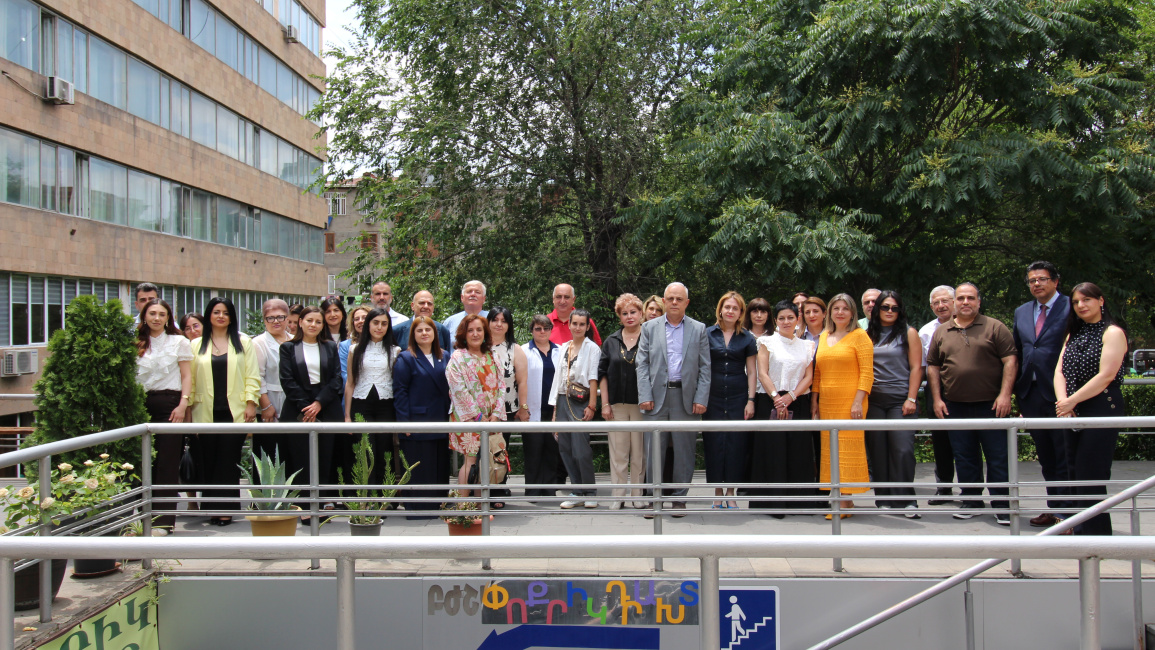
The workshop was held at the National Centre for Professional Education Quality Assurance Foundation. The event, held on June 24-25, was attended by representatives of the project's European and Armenian partner universities and institutions.
The European partners were represented by the University of Genoa (Italy), the Autonomous University of Madrid (Spain), the University of Lisbon (Portugal), and KTH Royal Institute of Technology (Sweden). From the Armenian side, representatives of Yerevan State University, Armenian State Pedagogical University after Khachatur Abovyan, Yerevan State Medical University, Northern University, the Institute for Informatics and Automation Problems of the National Academy of Sciences of the Republic of Armenia, the Ministry of Education, Science, Culture and Sports of the Republic of Armenia, and the Higher Education and Science Committee took part in the workshop.
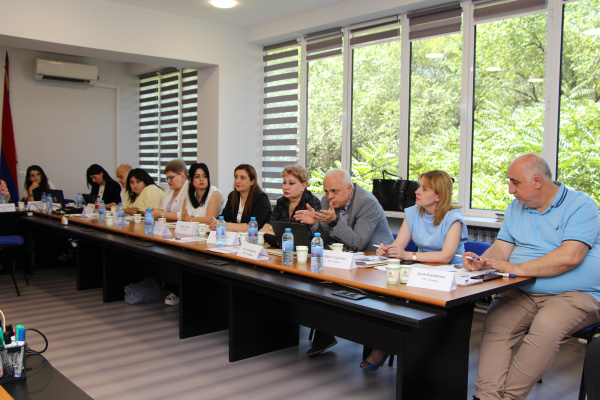
YSU was represented at the workshop by Armen Budaghyan, Director of the Quality Assurance Centre and project coordinator; Mari Santurjyan, Deputy Director of the Centre; Lusine Kharatyan, Director of the Continuing Education Centre; Marine Yaghubyan, Acting Dean of the Faculty of European Languages and Communication; L. Sargsyan, lecturer at the same faculty; and S. Petrosyan and S. Khachatryan, lecturers at the Chair of History, Theory and Logic of Philosophy.
During the workshop, participants discussed quality assurance standards for digital education, self-assessment tools and guidelines for their application, which are planned to be introduced in higher education institutions in Armenia.
On the first day, European partners Victor Cordas, Giovanni Adorni, Reyes Hernandez and Rui Mendes presented the experience of their universities, emphasizing the importance of introducing internal quality assurance mechanisms in digital education. The discussions also focused on the responsible and effective use of artificial intelligence in education.
Participants also discussed the Digital Competence Framework for lecturers at Armenian higher education institutions, developed within the framework of the project. The framework supports the professional, responsible and ethical use of digital technologies and artificial intelligence tools.
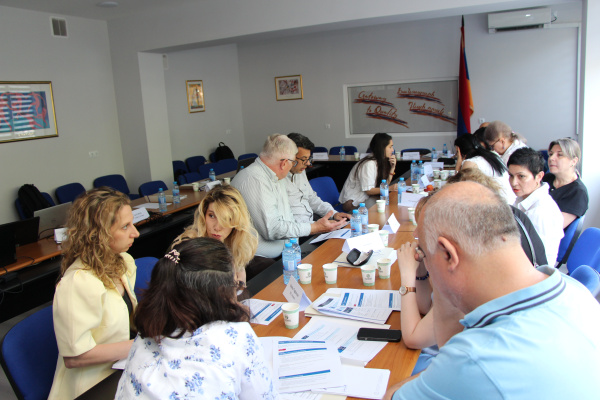
On the second day of the workshop, under the coordination of the European partners, participants discussed the objectives, key areas and possible application of the Digital Competence Framework in Armenian universities.
Throughout the two-day workshop, participants emphasized that quality assurance in digital and hybrid educational environments requires the same high standards as traditional classroom-based teaching. The discussions addressed the assessment of learning outcomes, the collection of evidence on their achievement, the effectiveness of teaching and assessment, and the provision of feedback. Summarizing the discussions, participants stressed that regardless of the mode of instruction — face-to-face, online or hybrid — the quality of education must meet the same high standards, with the same expectations and accountability maintained for learning outcomes.